Information · Climate Change
Climate Change
Climate change is being caused by our every day actions. Find out how you can reduce your impact on the planet today.
Climate change is being caused by our every day actions. Find out how you can reduce your impact on the planet today.
Climate Change (also known as Global Warming) is the name given to long term changes to temperature on and around the Earth's surface, which causes long term shifts to weather patterns.
It isn't limited to one region — it impacts the whole of the Earth. It is causing polar ice sheets and glaciers to melt and sea levels to rise. Extreme weather events such as typhoons and hurricanes are becoming more common in some regions, while others experience more punishing droughts and heat waves. Warmer ocean surface temperatures prompt coral bleaching and alter ocean chemistry, affecting corals and the organisms that depend on reef habitats.
In 2014, the Intergovernmental Panel on Climate Change (IPCC) published its 5th Assessment Report, which stated that the increase in greenhouse gas (GHG) concentrations — carbon dioxide (CO2), methane (CH4), nitrous oxide (N2O), HFCs, PFCs and sulphur hexafluoride (SF6) — over the past 100 years has predominantly been caused by human activities.
Support our Carbon Reduction programmes — UK, Americas and Global Projects.
GHGs are able to absorb long wave radiation (heat) that is reflected off the Earth's surface. They are then able to reemit this radiation back down to Earth. If there were no GHGs in our atmosphere the Earth would be too cold for life as we know it to exist. However, as more fossil fuels, are burnt and other GHGs are released, the atmosphere is able to absorb more radiation and so is warming up. This is known as the greenhouse effect.
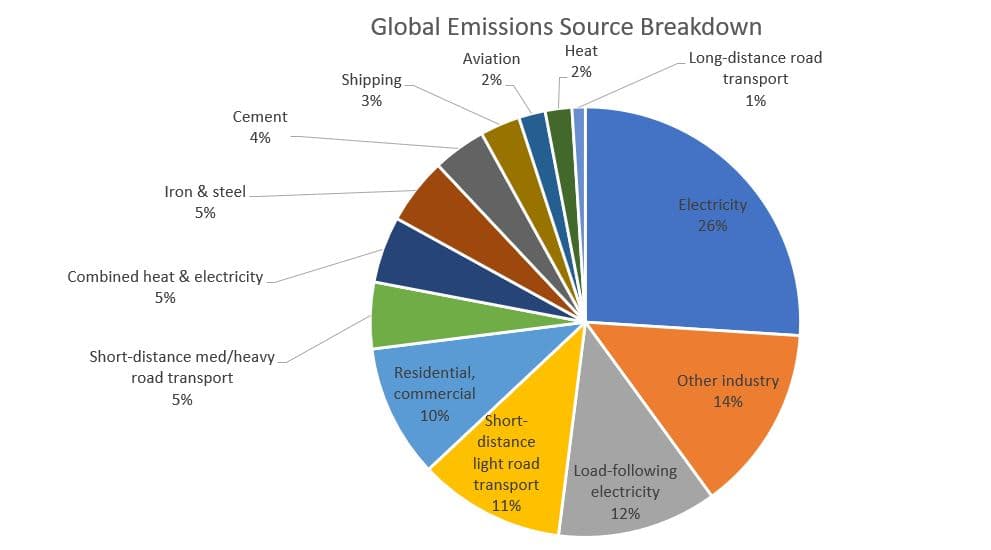
GHG emissions come from a range of human activities including electricity generation, industrial processes and transportation. Currently electricity and transport represent the largest sources of emissions — and the greatest opportunity for saving.
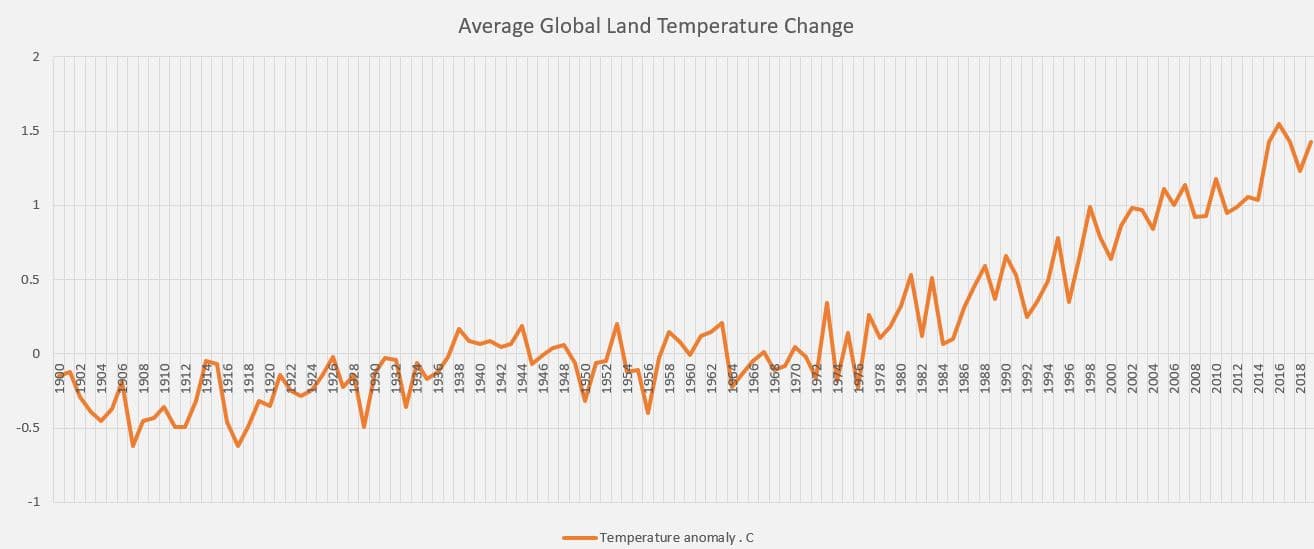
The global temperature has risen significantly since the Industrial Revolution, and particularly steeply over the past 40 years with increasing levels of human activity.
The Intergovernmental Panel on Climate Change (IPCC) has stated that if the temperature rise can be held to below 1.5⁰C, then the irreversible effects of climate change can be avoided. Above this level there will be highly significant and permanent changes to our environment and biodiversity.
Over recent times, the COVID-19 lockdown has caused an unprecedented change in global behaviours, including massive reductions in transport and electricity use. The IPCC forecast a 6% drop in energy use, leading to 4-8% anticipated reduction in CO2 emissions. Whilst this reduction (this year) is consistent with keeping the temperature rise to 1.5C, the same drop is required every year (until 2050) to assure that our planet remains under that threshold.
Since 1958, CO2 has been measured at the Mauna Loa Observatory in Hawaii. In 1958, the CO2 concentration in the atmosphere was measured at 316ppm, as of May 2016 it was 407ppm. Before the industrial revolution began (1880s), the CO2 concentration in the atmosphere was measured at 280ppm and so in just 130 years, CO2 concentrations have increased by 45%.
By comparison CO2 emissions, in the past 800,000 years before the industrial revolution, had fluctuated between 180ppm (when the Earth was in an ice age) to a maximum of 280ppm (in a warmer interglacial) period. Never in recent geological history and during the time in which humans have been on the Earth has the atmospheric CO2 concentration been as high as it is today.
The effects of climate change are already being seen across the Earth. The IPPC reported in the 5th Assessment Report that since 1880 there has been an increase in average surface temperature of 0.85⁰C. This may seem like a small number compared to changes in daily temperature however to put it into comparison how small global temperature changes can have a large effect, if the Earth's surface temperature was lowered by 5⁰C it would be in a full ice age.
Other changes currently being seen:
Global sea level has increased by 0.19m between 1910 and 2010.
Global average increase of 0.11⁰C between 1971 and 2010.
2016 saw the lowest winter sea ice ever recorded, beating the 2015 record.
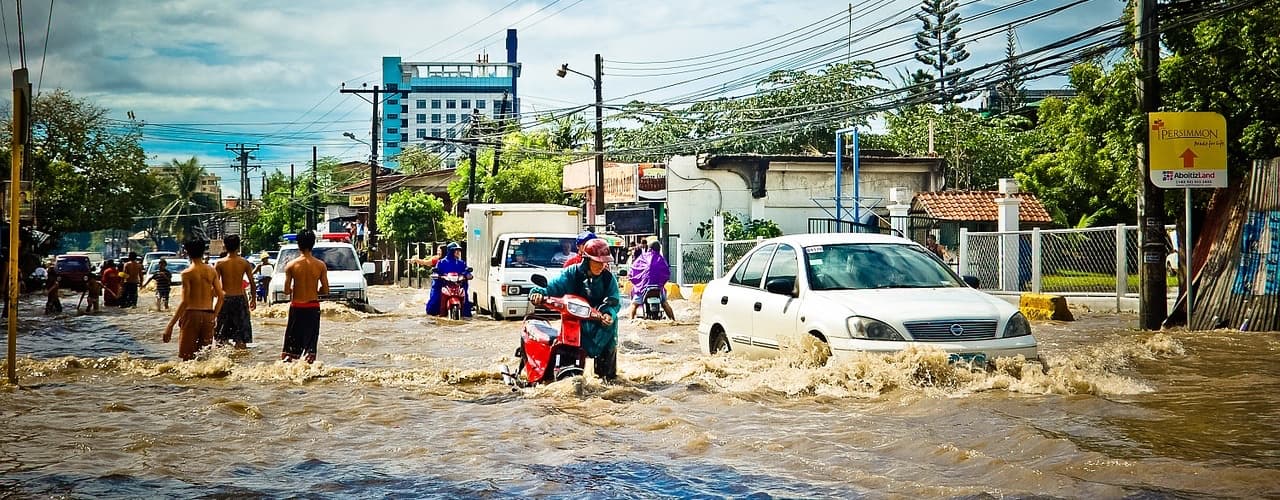
Some areas of the Earth are becoming seeing more intense flooding while others are seeing severe droughts.
As El Nino intensity is in part based on sea surface temperatures, rising temperatures will cause more intense El Ninos causing flooding, droughts, wild fires and famines.
The acidity of the oceans has decreased by 0.1 on the pH scale since the beginning of the industrial era.
As the global temperature continues to increase, so will the severity of these changes.
2021 saw the US hit by 20 separate billion-dollar climate disasters (NOAA, 2022) (causing a total of $145billion in damage), killing 648 people. This shows that the threat of climate change is very real, relevant and cannot be ignored.
In December 2015, the COP21 Climate Change conference produced the so-called Paris Agreement, a Global agreement between nations that aims to keep the rise in temperature to 1.5⁰C and to ensure that the temperature rise stays well below 2⁰C above preindustrial times. In order for this to be achieved, the global GHG emissions must be stabilised and then reduced.
We all need to play a part in reducing GHGs and there are many ways of doing this - and here's how:
Use our Carbon Calculator to find out the quantity of carbon emissions produced by your lifestyle and choices.
Carbon CalculatorSee our carbon reduction recommendation for individuals, energy saving for households and holiday carbon footprint information pages to find ways that you can reduce your emissions.
Carbon reduction tipsIf you want to get your organisation involved in reducing their emissions then Carbon Footprint Ltd offer business services to enable you to do this.
Business servicesIn modern life, you are unlikely to be able to get your carbon emissions down to zero (unless you have full access to renewable energies and clean energy powered cars etc). The average family of 4 causes 10 tonnes CO2 each year. Remember a tonne of CO2 saved in Mumbai is the same as one saved in Manchester or Miami.
Carbon Offsetting programmeWe are already experiencing the impact of climate change. Also the lives of our children and grandchildren and their experience of biodiversity and the environment are most likely to be change irrevocably.
Over recent times we have been able to successfully reverse the depletion of the protective ozone layer, principally by eradicating Chlorofluorocarbons (CFCs). It's time to so the same for the Global Warming.
Page updated: 29 May 2026
We all have a part to play in keeping the temperature rise below 1.5⁰C. Measure your footprint, make a plan and offset what you cannot yet reduce.